
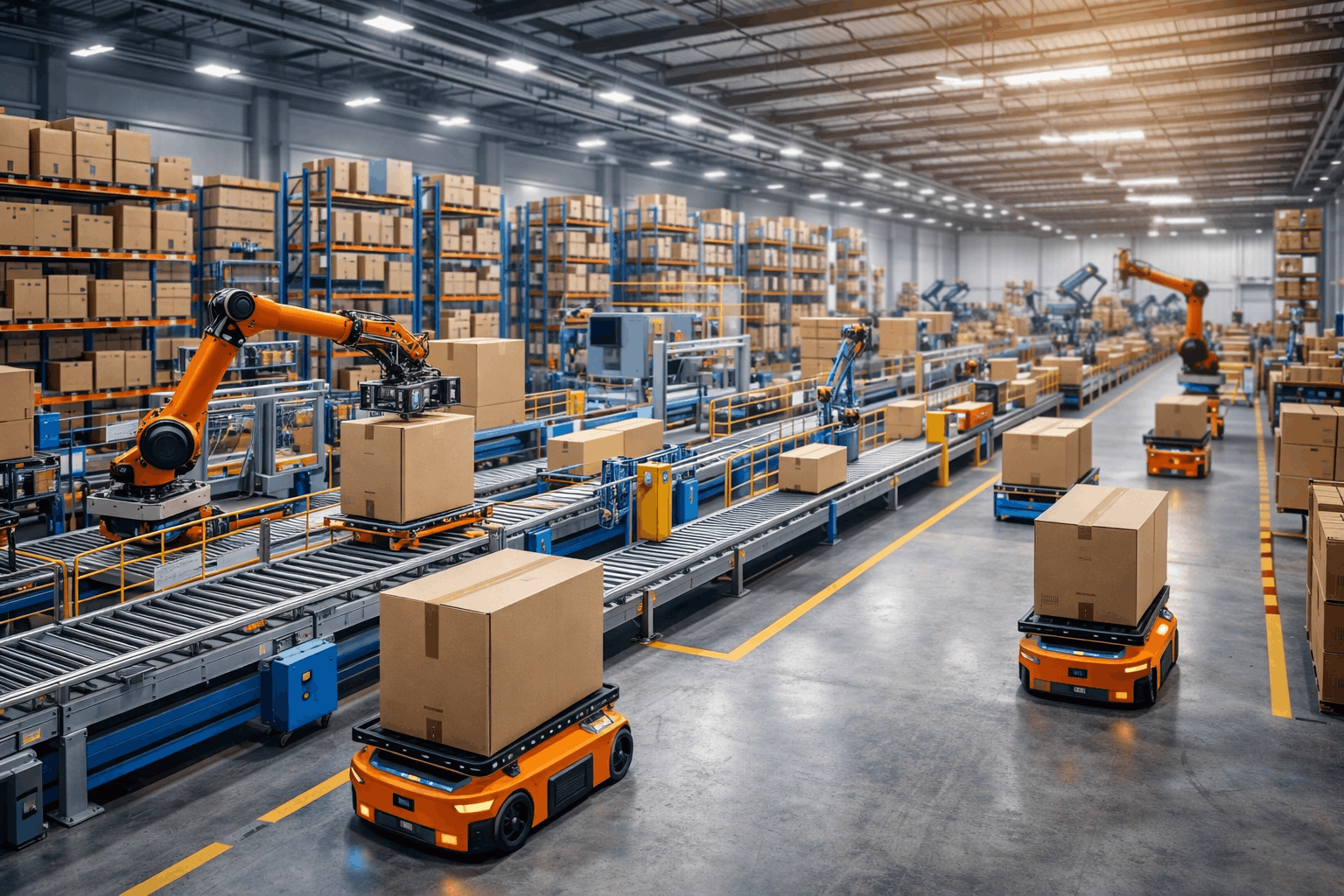
Inside a Modern Warehouse: How Automation Is Transforming Cargo Operations

Author Sparkle Logistics
Published on December 28, 2023
Comments 0

Inside a Modern Warehouse: How Automation Is Transforming Cargo Operations

Warehousing is no longer just about storing goods—it has become a critical engine of speed, accuracy, and efficiency in today’s supply chains. Modern logistics facilities are rapidly adopting automation and digital systems to handle growing cargo volumes, tighter delivery timelines, and higher customer expectations.

Let’s take a behind-the-scenes look at how automation is transforming cargo operations inside a modern warehouse.


The Shift from Manual to Smart Warehousing

Traditional warehouses relied heavily on manual processes—paper-based tracking, manual stock counts, and labor-intensive material handling. While effective in the past, these methods struggle to keep up with today’s fast-moving global trade environment.

Modern warehouses are now powered by automation, real-time data, and intelligent systems, enabling faster decision-making and seamless cargo movement.


ERP Integration: The Brain of Warehouse Operations

At the core of warehouse automation lies ERP (Enterprise Resource Planning) integration. ERP systems connect inventory, inbound and outbound movements, billing, and reporting into a single digital platform.

With ERP-enabled operations, warehouses can:

  • Monitor real-time inventory levels

  • Reduce manual errors and duplication

  • Improve planning and forecasting

  • Provide accurate data visibility to customers

This centralized control ensures smoother coordination across logistics, transport, and distribution activities.


Smart Tracking & Real-Time Visibility

One of the biggest advantages of modern warehouses is smart tracking. Using barcode systems, RFID, and digital scanners, every cargo movement is recorded and tracked in real time.

This allows logistics teams to:

  • Instantly locate cargo within the facility

  • Track inbound and outbound shipments

  • Minimize misplaced or lost inventory

  • Improve accountability and turnaround time

Real-time visibility not only improves internal efficiency but also builds trust with clients through transparent reporting.


Advanced Material Handling Systems

Automation has significantly improved how cargo is moved within warehouses. Modern facilities use a combination of:

  • Electric forklifts and pallet movers

  • Very Narrow Aisle (VNA) handling systems

  • Conveyor belts and automated lifts

  • High-density racking solutions

These systems optimize space utilization, reduce manual labor, and enhance safety while handling large cargo volumes efficiently.


Warehouse Automation & Safety

Automation doesn’t just boost productivity—it also enhances workplace safety. Smart systems help reduce human error, control movement patterns, and enforce safety protocols across warehouse operations.

Automated workflows, fire protection systems, access controls, and monitored zones ensure that goods and personnel remain protected at all times.


The Business Impact of Automated Warehousing

For logistics providers and their clients, automation delivers tangible benefits:

  • Faster order processing and dispatch

  • Reduced operational costs

  • Higher accuracy in inventory management

  • Scalability to handle seasonal or business growth

  • Improved customer satisfaction

Warehouses that invest in automation are better equipped to meet the demands of global trade and e-commerce-driven logistics.


Automation in Action at Transmarine Cargo

Modern logistics facilities operated by Transmarine Cargo leverage automation, ERP integration, and smart material handling systems to deliver efficient, reliable, and scalable cargo solutions. By combining advanced technology with operational expertise, Transmarine Cargo ensures smooth warehouse operations aligned with international logistics standards.


Conclusion

Automation is redefining what it means to run a warehouse. From ERP-driven processes and smart tracking to advanced material handling systems, modern warehouses are built for speed, precision, and scalability.

As global trade continues to evolve, automated warehousing will remain a key differentiator for logistics providers focused on operational excellence and customer satisfaction.

Comments (0)

No comments yet.

Leave a reply

Your email address will not be published. Required fields are marked *