
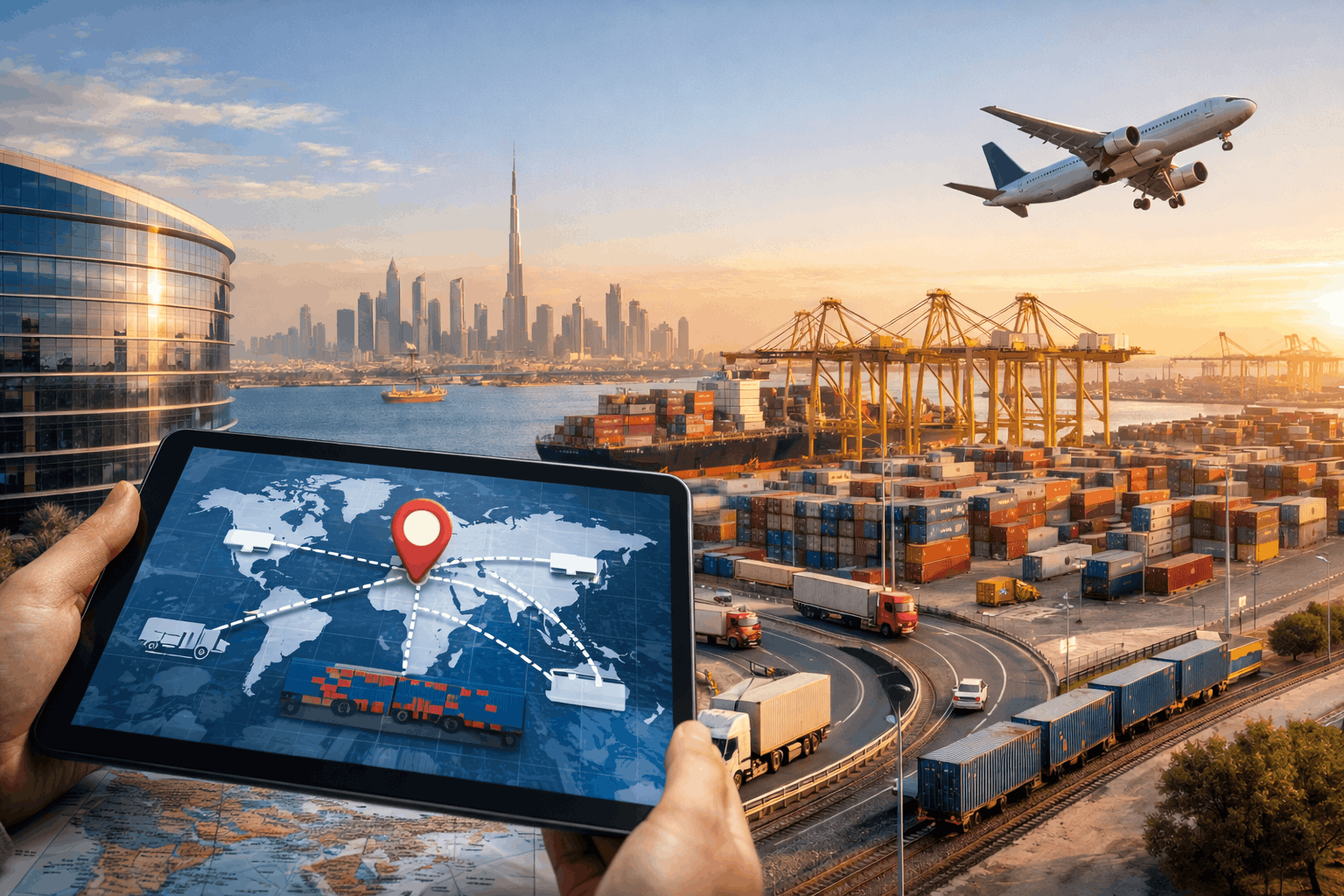
How Strategic Location Impacts Supply Chain Efficiency
In global logistics, where your operations are located is just as important as how they are managed. Strategic location plays a decisive role in reducing transit time, controlling costs, improving reliability, and ensuring faster market access.
A well-positioned logistics hub can transform supply chain performance—and Jebel Ali Free Zone (JAFZA) stands as one of the world’s best real-life examples of optimized logistics planning.
Why Location Matters in Modern Supply Chains
Supply chains today operate under intense pressure: faster deliveries, leaner inventories, and global customer expectations. Strategic location helps logistics providers and businesses achieve these goals by:
Minimizing transportation time
Reducing fuel and handling costs
Improving delivery predictability
Enabling faster response to market demand
When warehouses are positioned close to major transport corridors, the entire supply chain becomes more agile and cost-efficient.
Proximity to Seaports: Faster Global Trade Movement
Access to a major seaport is critical for international trade. JAFZA is directly connected to Jebel Ali Port, the largest port in the Middle East and one of the busiest in the world.
This proximity allows:
Faster container offloading and cargo transfer
Reduced port-to-warehouse transit time
Lower inland transportation costs
Seamless import and export operations
For businesses handling high cargo volumes, this direct port access significantly improves turnaround times and operational efficiency.
Airport Connectivity: Speed for Time-Sensitive Cargo
In today’s supply chains, air freight is essential for high-value and time-critical goods. JAFZA is strategically located near Al Maktoum International Airport, enabling smooth sea-air and air-sea logistics operations.
This advantage supports:
Rapid movement of urgent shipments
Efficient handling of electronics, pharmaceuticals, and perishables
Reduced delays between air cargo and warehouse operations
Multi-modal connectivity allows businesses to choose the fastest and most cost-effective transport method for every shipment.
Highway Access & Inland Distribution
Beyond ports and airports, highway connectivity plays a vital role in regional distribution. Jebel Ali’s direct access to major highways ensures seamless movement of goods across:
Dubai and the wider UAE
GCC countries
Regional distribution centers
Strong road connectivity enables faster last-mile delivery and smoother inland logistics—critical for retail, e-commerce, and manufacturing supply chains.
Centralized Warehousing = Operational Efficiency
Strategically located warehouses reduce the need for multiple storage points. By centralizing inventory near transport hubs, businesses benefit from:
Lower inventory holding costs
Faster order fulfillment
Better inventory visibility
Simplified supply chain management
This centralized approach enhances responsiveness while maintaining cost control.
Jebel Ali: A Model of Optimized Logistics Planning
JAFZA brings together seaport access, airport proximity, highway connectivity, and world-class infrastructure in one integrated ecosystem. This combination makes it a preferred location for warehousing, distribution, and regional headquarters.
Logistics providers operating in Jebel Ali can design highly efficient supply chains that serve markets across the Middle East, Africa, Europe, and Asia from a single hub.
Strategic Advantage with Sparkle Logistics
By operating from strategically positioned facilities in Jebel Ali, Sparkle Logistics enables businesses to capitalize on faster cargo movement, reduced logistics costs, and reliable supply chain performance. This location advantage allows clients to scale operations while maintaining speed, security, and service quality.
Conclusion
Strategic location is a foundational pillar of supply chain efficiency. Proximity to ports, airports, and highways directly impacts speed, cost, and reliability—making it a critical business decision rather than just an operational one.
Jebel Ali exemplifies how smart logistics planning, combined with the right location, can transform supply chain performance and create long-term competitive advantage.
Leave a reply
Your email address will not be published. Required fields are marked *